
Dearborn County Criminal Court Records
A Dearborn County criminal court record begins when the State files a criminal case in court. The record is maintained through Indiana's court system and local clerk channels. It can include the charging information, probable-cause material if public, initial hearing, bond order, plea agreement, motions, hearing notices, sentencing order, fines, court costs, probation entries, and final judgment. The record may also show a count-by-count outcome, so one case can have both convicted and dismissed charges.
Criminal venues in Dearborn County are split by the local trial courts described in the county research. Dearborn Circuit Court handles major felony matters identified by the county page as Class C and above under older classifications, while Dearborn Superior Court I has a general criminal docket. Superior Court II is also part of the county trial system. The Dearborn/Ohio County Prosecutor represents the State in felony and misdemeanor cases. For the narrower charge details that follow booking, use the Dearborn County arrest records and charge records page.
The official Dearborn County Prosecutor page describes the criminal prosecution role and Special Crimes Unit.
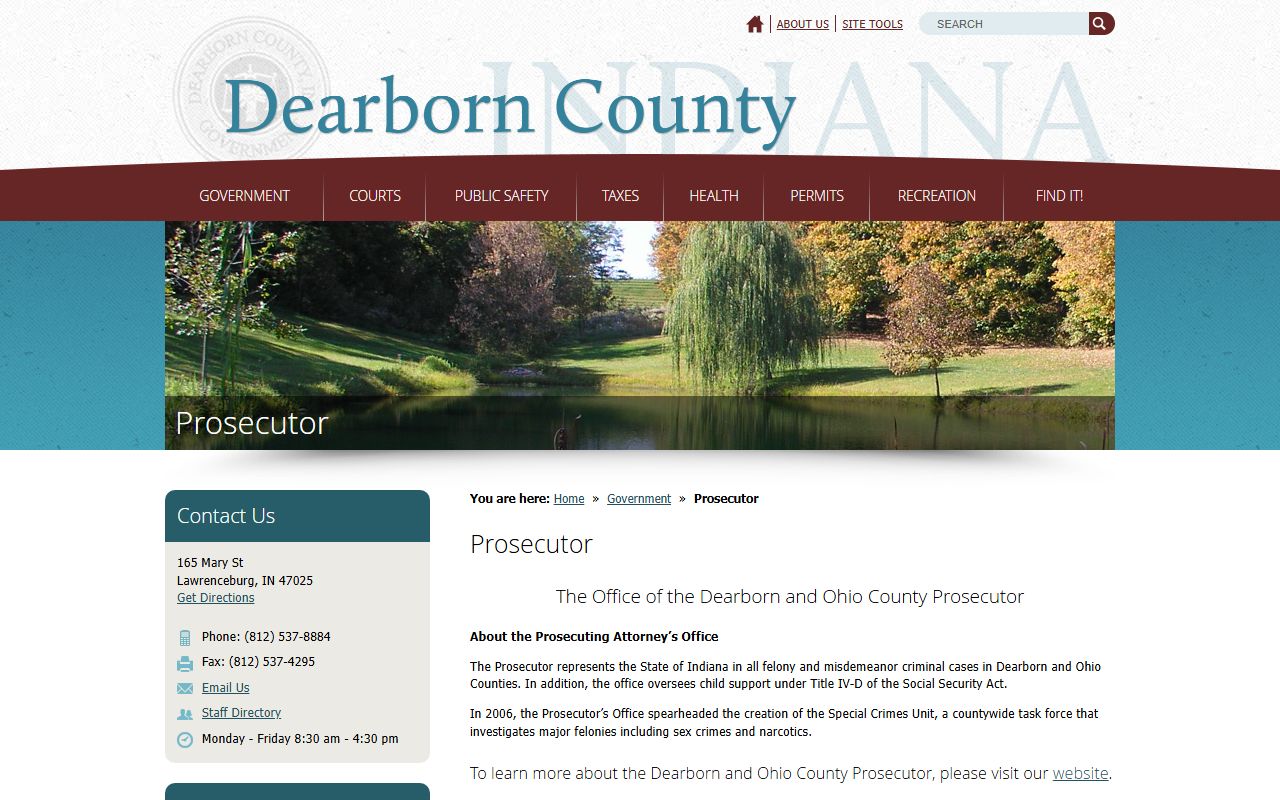
That prosecutor role helps explain why a criminal court file can differ from the arrest record created by law enforcement.
Search Dearborn County Criminal Records
Public criminal case lookup starts with Indiana MyCase. Search by case number if known, or use a defendant name with date of birth as a narrowing field. The date of birth can help distinguish people with similar names, but MyCase does not display DOB in public details. Case-type filters can help separate felony, misdemeanor, miscellaneous criminal, infraction, and traffic-related matters. Court filters can limit results to Dearborn Circuit Court or the Dearborn Superior Courts.
- Open MyCase and choose Case or Party search.
- Enter the case number, defendant last name, first name, or other available search fields.
- Narrow by Dearborn court, criminal case type, status, or filing date when results are broad.
- Open the case and review charges, docket entries, hearings, disposition, sentence, and financial information.
- Contact the Dearborn County Clerk of Courts for certified copies or documents not linked online.
MyCase is a public lookup tool, not the certified court record. The Dearborn County Clerk of Courts remains the official source for copies when a document is missing, a sentencing order must be certified, or the record needs archive review. If the person is currently in custody, jail booking detail is a separate sheriff record and belongs with the inmate roster rather than the criminal court file.
Dearborn Criminal Case Flow
A criminal court record shows movement through the court process. The exact path depends on the offense, court, plea, motion practice, and whether the case resolves before trial. Still, the public docket commonly follows a recognizable flow. The charge opens the court case, the initial hearing or arraignment starts formal court processing, pretrial entries build the record, and the final docket should show a disposition and any sentence or financial order.
Case flow: Charges Filed › Initial Hearing or Arraignment › Pretrial and Motions › Plea or Trial › Disposition › Sentencing
| Stage | What Happens |
|---|---|
| Charges Filed | The prosecutor files the charging information or other formal accusation with the court. |
| Initial Hearing / Arraignment | The court advises the defendant of charges, rights, bond conditions, and future dates. |
| Pretrial / Motions | Attorneys file appearances, discovery requests, motions, continuances, and plea papers. |
| Plea or Trial | The case resolves by plea agreement, trial verdict, dismissal, or other disposition. |
| Sentencing | The court enters punishment, probation, fines, costs, restitution, jail credit, or other terms. |
What Dearborn Criminal Records Show
Dearborn County criminal court records should be read count by count. A case may include several charges from one arrest or investigation. One charge may be amended, another dismissed, and a third resolved by plea. The docket can also contain bond activity, warrant activity if public, payment entries, probation notes, and court services references. Superior Court I's general jurisdiction docket and Circuit Court's major-felony role make the court field especially important.
| Field | What It Shows |
|---|---|
| Case Number | Indiana uniform criminal case number, searchable with or without hyphens in MyCase. |
| Defendant | Public party name, with personal identifiers such as DOB withheld from public details. |
| Charges | Offense name, statute citation, count number, level or class, filed date, and status. |
| Bond / Warrant Entries | Bond orders, failure-to-appear activity, warrant entries, or recall events when public. |
| Plea / Disposition | Guilty plea, trial result, dismissal, judgment, or other count-specific outcome. |
| Sentence | Jail, probation, fines, costs, restitution, suspended time, conditions, or court services. |
The Indiana criminal law title is the statutory source tied to many criminal charge and expungement references.
Statute citations in a Dearborn County criminal record should be matched to the charge date and current case posture before drawing conclusions.
Dearborn Charges vs Convictions
A charge is an accusation filed in court. A conviction is a final guilt finding or guilty plea. Dearborn County criminal court records can show charges that were amended, reduced, dismissed, or resolved without conviction. That distinction is central when reading a case summary. The charging information tells what the State alleged. The disposition and sentence tell what the court ultimately did with each count.
| Issue | Charge | Conviction |
|---|---|---|
| Stage | Filed accusation by the prosecutor | Final guilt finding, verdict, or plea |
| Proof level | Based on probable cause and formal filing | Based on plea or proof beyond a reasonable doubt |
| Record effect | May remain visible even if later dismissed | Can affect sentence, fines, probation, and criminal history |
| Where to read | Charge list and early docket entries | Disposition, judgment, sentencing order, and financial entries |
Read Dearborn Criminal Sentences
Disposition language can be brief. "Dismissed with prejudice" generally means the charge cannot be refiled in the same way, while "dismissed without prejudice" may allow refiling if legally permitted. A guilty plea or guilty finding should be tied to a sentencing entry. A judgment can include money owed, restitution, suspended time, probation, jail credit, no-contact terms, or other conditions. Probation entries may connect to Court Services, which was created from Superior Courts Probation and Southeast Regional Community Corrections.
Specialty court tracks may also appear in some criminal records. Superior Court I hosts A.C.C. Drug Court and Veterans Treatment Court. Those programs do not erase the need to read the formal disposition, but they can explain treatment-oriented entries, program reviews, sanctions, or compliance hearings. The prosecutor, defense counsel, public defender appointment, and court services entries may all appear as separate docket events.
The Indiana Prosecuting Attorneys Council profile identifies Lynn M. Deddens as the Dearborn/Ohio County Prosecutor.
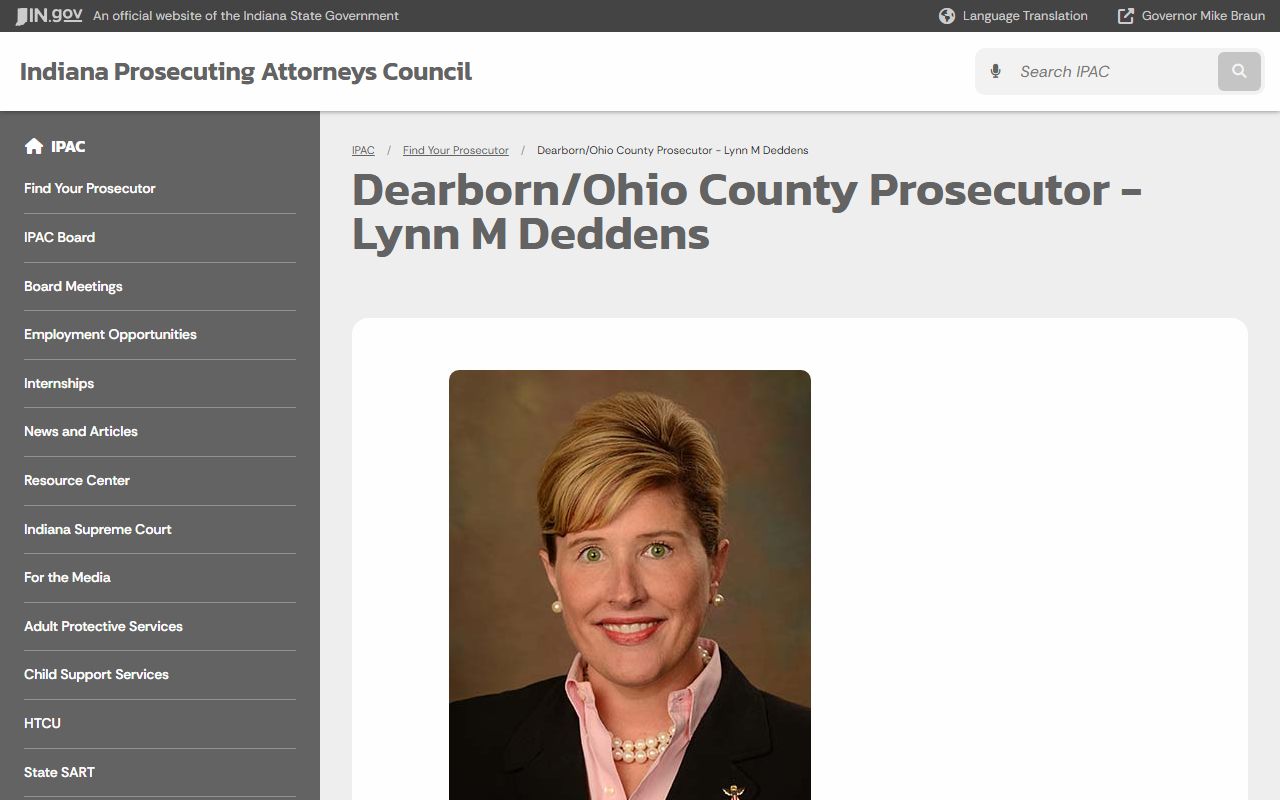
That office identity matters because the prosecutor files and handles the State's felony and misdemeanor cases in Dearborn County.
The local prosecutor biography adds Dearborn and Ohio County context for the office that appears on criminal court records.
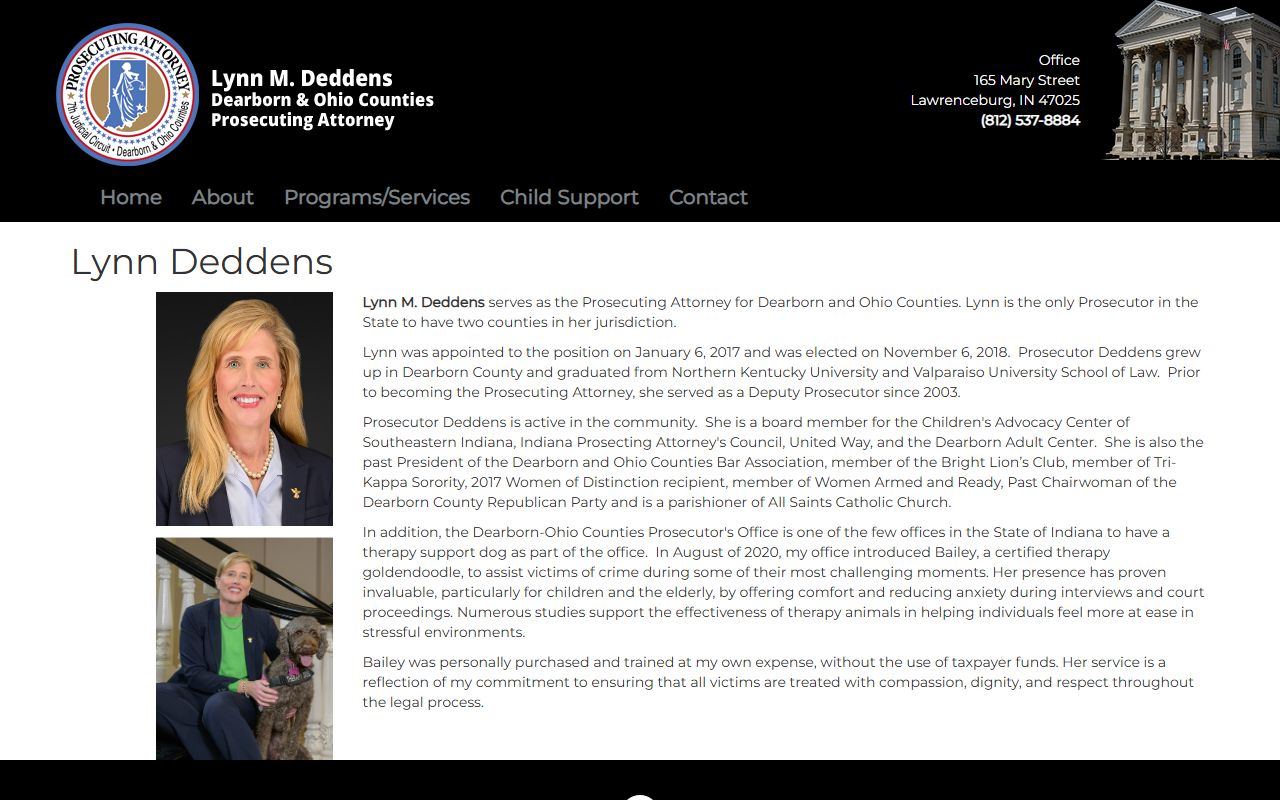
That local profile supports the county-specific role of the prosecutor without changing the court record source, which remains MyCase and the clerk.
Dearborn Sealed Criminal Records
Sealed and expunged criminal records are not the same. A sealed record is hidden from ordinary public access by statute or court order. An expungement under Indiana law can restrict or remove public access to eligible arrest, charge, and conviction records, depending on the statute section and case type. A granted expungement may remove the underlying case from MyCase public access. A pending or denied expungement case may still appear.
| Issue | Sealed | Expunged |
|---|---|---|
| Public visibility | Hidden or limited by court order or rule | Restricted or removed under Indiana expungement law |
| How it starts | By statute, rule, or a sealing order | By petition under IC 35-38-9 when eligible |
| Effect | Public users may see little or nothing | Effect depends on arrest-only, misdemeanor, felony, or consent categories |
| Access path | May require party access, attorney access, clerk review, or court order | May require court review and agency updates after an order is granted |
Note: A missing online criminal case can mean expungement, sealing, confidentiality, data limits, or no matching case.
Dearborn Criminal Record Access
Public access to Dearborn County criminal court records comes from Indiana court rules and public-records law. Administrative Rule 9 governs courthouse and remote access to publicly accessible court records. Access to Court Records Rule 5 excludes confidential categories and sealed records from public access. Indiana APRA applies to many agency records, but court case access follows the court-record rules.
Juvenile records, adoption-linked records, protection-order identifying information, sealed cases, expunged records, medical information, mental-health details, and personal identifiers may be unavailable or redacted. Criminal history reports from non-court systems can differ from a court file because they draw from law-enforcement, prosecutor, and state repositories. For federal criminal cases from Dearborn County, the U.S. Attorney's Office for the Southern District of Indiana and federal court records are separate from county court records.
The Southern District of Indiana U.S. Attorney page is relevant only for federal criminal prosecutions, not Dearborn County state criminal dockets.
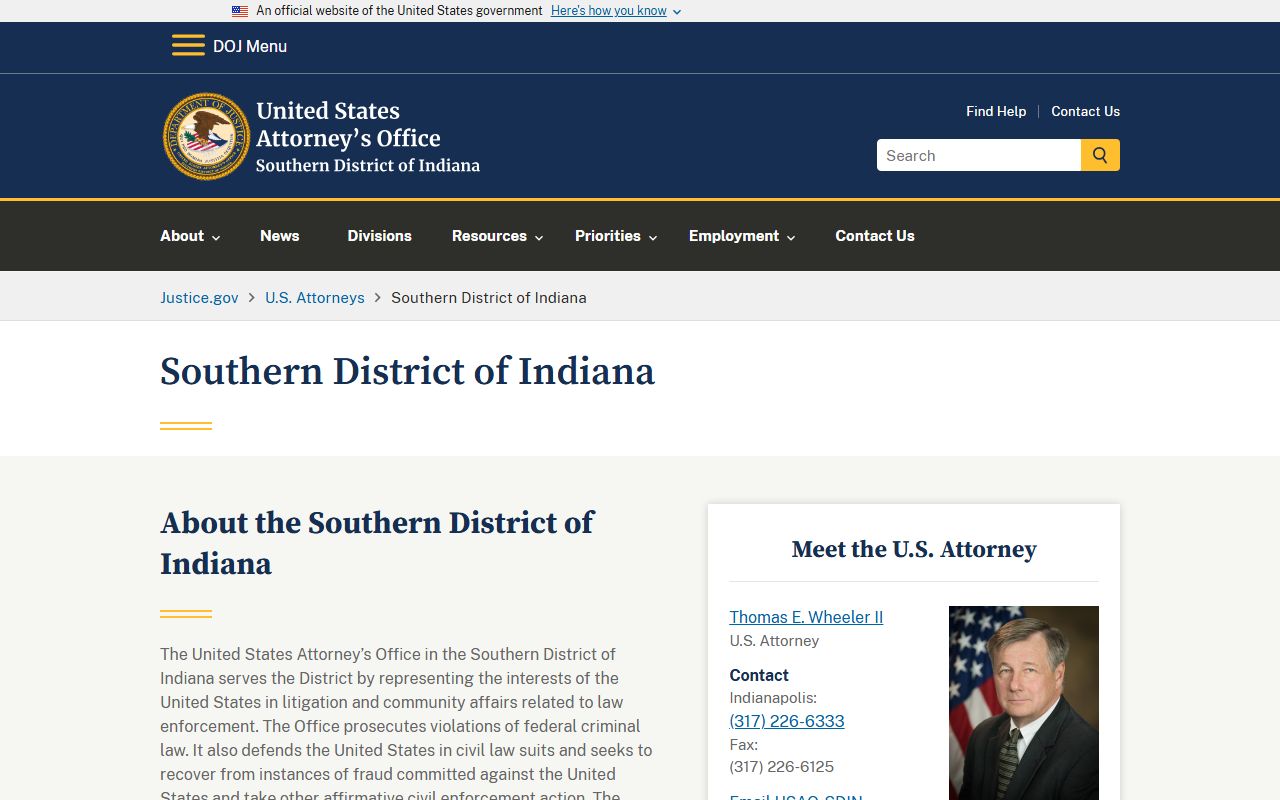
That federal distinction prevents a state criminal case search from being confused with a PACER or federal prosecution search.
Restricted Dearborn Criminal Records
Dearborn Circuit Court has exclusive juvenile jurisdiction, and juvenile delinquency, CHINS, and many related records are restricted. Indiana juvenile records rules under IC 31 set special access limits. MyCase also excludes date of birth from public details, even when DOB can be used to narrow a search. If a case has a protection-order link, victim information, sealed evidence, mental-health material, or expungement activity, public records may be partial.
For official copies, use the Dearborn County Clerk of Courts at 165 Mary St, Lawrenceburg, IN 47025. The Clerk phone is (812) 537-8867, and the Superior clerk phone is (812) 537-8877. The official sources did not locate a public Dearborn copy-fee schedule for criminal case documents, so fees should be confirmed with the clerk before mailing or requesting certified copies.