
Dearborn County Probate Court Role
Dearborn County does not have a stand-alone probate court under the state map used for this build. The Dearborn Circuit Court has exclusive jurisdiction over probate matters, including estates, guardianships, adoptions, and trusts. The same court also has exclusive juvenile jurisdiction, including child-in-need-of-services cases. That overlap matters because probate, guardianship, adoption, and juvenile issues can share protected-person details even when the case categories are different.
Public probate access is therefore a two-part process. Use Indiana MyCase for public case information, then use the Dearborn County Clerk of Courts or Circuit Court for documents that are not available online. The clerk's official services include public access support for genealogy, archive, court records, and computer terminal access. That local archive support is important in Dearborn County because the courthouse history notes that many early records were lost in the 1826 courthouse fire.
The Dearborn County Doxpop recorder page is a useful reminder that land and estate research often overlap, even when recorder records are not probate files.
Probate researchers may need both the court estate file and related property records to follow transfers after a death.
Dearborn Probate Terms
Probate records use terms that are short but specific. A basic glossary helps separate the person who died, the person who handles the estate, and the type of case being searched. Indiana court staff can provide access and forms, but they cannot give legal advice about which filing is best for a family or estate.
- Testator
- A person who made a will before death.
- Executor
- The person named in a will to carry out estate duties after court appointment.
- Intestate
- Dying without a valid will, so property is handled under Indiana law.
- Guardianship
- A case asking the court to appoint someone to care for a minor or protected adult, or manage that person's affairs.
- Conservatorship
- A protective arrangement for managing a person's property or financial affairs; Indiana probate searches may show related protected-person filings.
Search Dearborn Probate Records
Start with MyCase when the goal is to find a public estate or guardianship case. Search by party name, estate name, decedent name, attorney, or case number if known. The court filter should be set to Dearborn Circuit Court when the search is probate-specific, because the Circuit Court has exclusive probate jurisdiction in the county. If the online portal does not show the document, the next step is not a third-party site. Contact the Dearborn County Clerk of Courts or the Circuit Court.
- Decide whether the record is an estate, will, guardianship, adoption, trust matter, or other probate-related filing.
- Search MyCase by party, case number, attorney, court, status, case type, and file date.
- Limit the court to Dearborn Circuit Court when the portal allows that filter.
- Call or visit the Clerk of Courts for documents not online, certified copies, or archive and genealogy support.
- Expect adoption records, medical information, minor details, and sealed filings to be restricted.
Note: A public case entry does not mean every probate document is public online.
Probate Search Fields
The probate search fields are drawn from the Indiana MyCase search structure documented in the research file. A party search is often the most practical starting point for estates and guardianships, while a case number search is best when a notice, attorney letter, or prior filing already identifies the case. Date ranges can help when searching common surnames in older Dearborn County families.
| Field Label | Type | Required | Format Notes |
|---|---|---|---|
| Search by Party | Tab | Yes if no case number | Use decedent, estate, petitioner, guardian, respondent, or interested-party name. |
| Last Name / Business Name | Text | Conditional | Wildcards can help with starts-with searches. |
| First / Middle | Text | Optional | Narrows individual name matches. |
| Case Number | Text | Conditional | Indiana uniform case number; hyphens may be optional. |
| Attorney | Tab / text | Optional | Search by attorney name or bar number. |
| Court | Dropdown | Optional | Limit to Dearborn Circuit Court for probate matters. |
| Case Type | Dropdown | Optional | Estate, guardianship, adoption, or trust-related categories if available. |
| Status | Dropdown | Optional | Open or closed. |
| File Date | Date range | Optional | Useful when the likely estate filing period is known. |
Dearborn Probate Contact Cards
Because Dearborn County probate jurisdiction sits in Circuit Court, the main court contact and the clerk contact should both be kept close. The court handles the probate case, while the Clerk of Courts is the records office for filings, official copies, archive access, and terminal support. The county sources list the same Mary Street courthouse address for both.
Dearborn Circuit Court
165 Mary St
Lawrenceburg, IN 47025
(812) 537-8865
Fax: (812) 537-8765
Monday-Friday, 8:30 a.m.-4:30 p.m.
Dearborn County Clerk of Courts
165 Mary St
Lawrenceburg, IN 47025
(812) 537-8867
Fax: (812) 532-2021
Monday-Friday, 8:30 a.m.-4:30 p.m.
Probate Filing Fees
The inspected official sources did not expose a current Dearborn County probate filing fee schedule, certified copy fee, or guardianship filing amount. The safest record-access path is to confirm fees with the Clerk of Courts before filing or requesting copies. Fee amounts can depend on the case type, certification need, number of pages, service method, and whether the matter is a new filing or a copy request from an existing file.
| Item | Amount |
|---|---|
| Probate filing fee | Not located in inspected official sources |
| Certified copy | Not located in inspected official sources |
| Plain copy | Not located in inspected official sources |
| Guardianship filing | Not located in inspected official sources |
| Will safekeeping deposit | Not located in inspected official sources |
What Dearborn Probate Shows
Estate files may include petitions to open an estate, wills admitted to probate, letters testamentary or letters of administration, inventories, creditor notices, claims, accounting filings, distribution papers, and closing entries. A will that has not been filed with the court is not the same thing as a public probate record. Once a will is admitted in an estate case, it may become part of the court file unless a rule or order limits access.
Guardianship records can include petitions, orders appointing a guardian, annual reports, financial reports, medical or care information, and protected-person details. Some of that information may be public, but sensitive details are often restricted or redacted. Trust records usually appear only when a trust dispute, court-supervised trust matter, or related petition has been filed. Adoption records are the most restricted category listed in the probate research.
The Circuit Court judge page is one of the official local sources tied to Dearborn County probate jurisdiction.
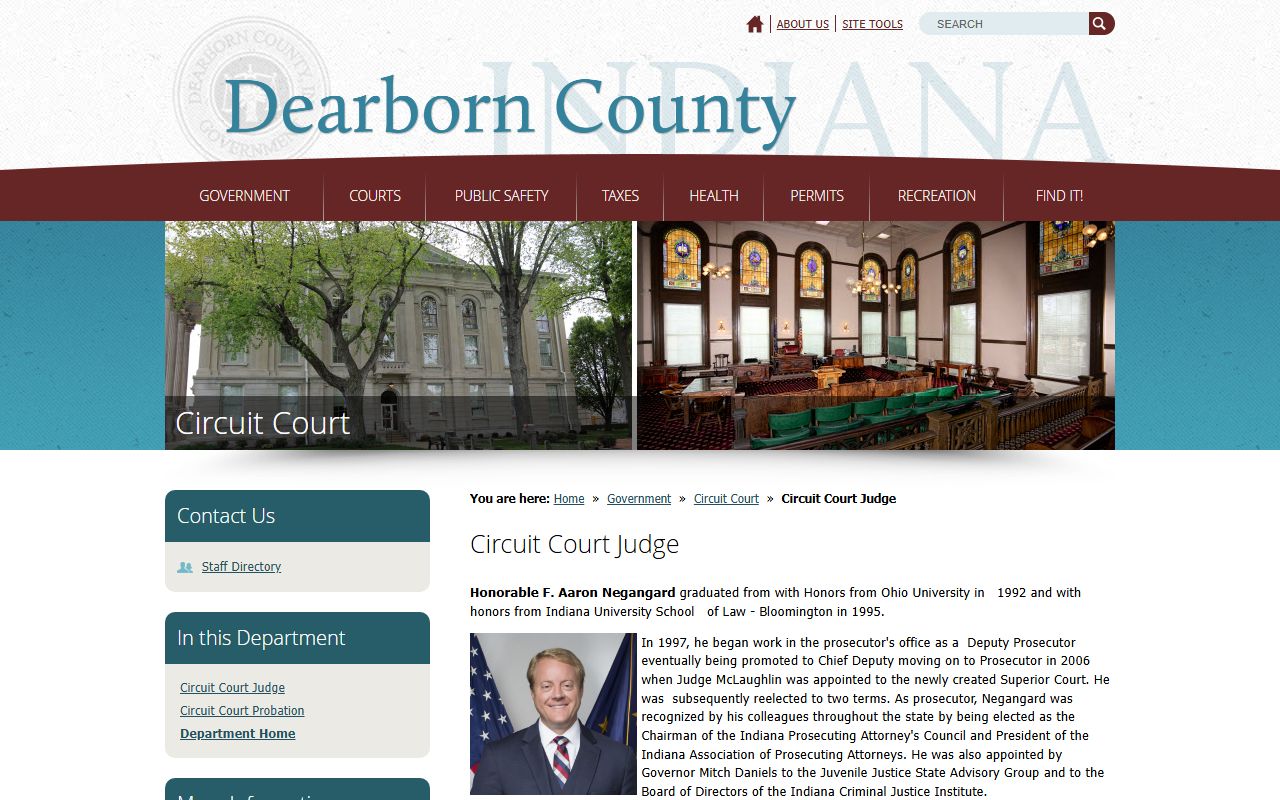
That court connection is why probate searches should be framed around Dearborn Circuit Court rather than a separate probate court name.
Restricted Probate Records
Probate access is not all-or-nothing. Estate dockets and many estate filings may be public, while adoption files, medical details, minor information, protected-person data, and sealed filings may be withheld. The Indiana public document access material reviewed in the research marks adoption documents unavailable to the public online and in person in the basic public-access table. Guardianship records may also include information that is not fit for public release even when the case itself is visible.
The U.S. Bankruptcy Court for the Southern District of Indiana reflects a separate but sometimes related record path. Probate estates, trust disputes, and debtor-creditor issues may intersect with federal bankruptcy records, but those files are searched through federal systems, not the Dearborn County probate file.
When a probate party also appears in bankruptcy, use the court record type and court name to avoid mixing county probate records with federal bankruptcy records.